
Daily rhythms, intuitive eating, and why what you won’t do matters as much as what you will.
Listen Now!Apple |Spotify |YouTube
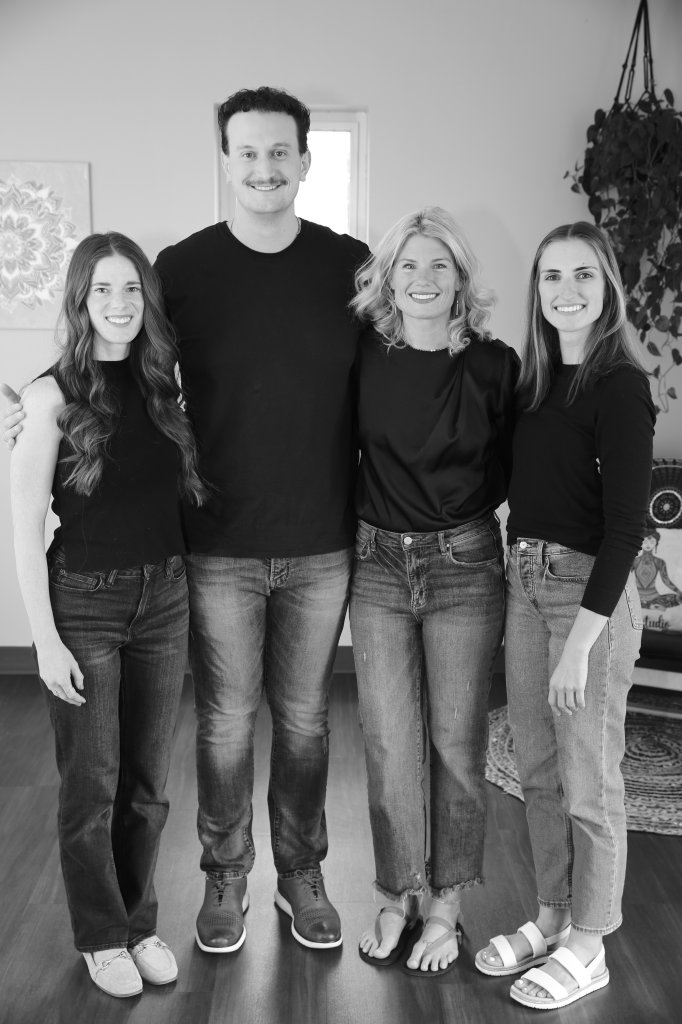
We sat down to talk about our own routines, and it turned into something bigger.
This month’s Doc Talk was supposed to be a quick rundown of what each of us does for our own health. Morning routines, workouts, sleep habits, the usual. And it started that way. But somewhere in the middle of it, the conversation turned into something more honest about what builds health over time, and it wasn’t about having the perfect routine.
You were designed to be healthy. That’s the starting point. But if you’re not giving your body the right mix of things it needs, it’s going to show you in other ways. So we talked through what we each do to support that, and more importantly, what we’ve learned about giving ourselves grace along the way.
Health is a lot of small decisions, repeated over time.
That’s really the whole thing. Resiliency doesn’t come from one big overhaul. It comes from the small choices you make daily that, stacked up, determine how well your body can respond when life puts demands on it. Good stress, bad stress, a hard week, a sick kid. Vital health is what lets you stay dynamic through all of it instead of getting knocked sideways every time.
And health isn’t only physical. It’s how you handle emotional stress. It’s how you rest. It’s how you connect with the people you love. All of that feeds into the same system.
My own routine has changed a lot, and that’s been the point.
In my 20s, I had a rigid routine. Wake up at this time, get this much exercise, no exceptions. Having kids and nursing changed that fast. I had to learn that sometimes sleeping in or sitting outside in the sun matters more than getting a run in, and that took me a while to give myself permission for. I used to be a lot harder on myself about it.
Now, daily movement still matters to me, but it’s more about my mental state than the physical result. If I move, I’m in a better headspace, period. Mornings usually start with hot water and lemon, then weights, a walk, or a yoga class if my schedule allows it. I try to fuel with something real, eggs or protein, not junk, though plenty of mornings I’m fasted and that’s fine too.
Through the day, if I’m not overscheduled, I’ll get outside for a few minutes at lunch or just sit somewhere quiet for ten minutes. And at night, walking in the door to my younger kids, I’ll sometimes sit in the car for a second first just to reset so I’m present when I walk in instead of still carrying the day with me.
Same goes for my husband. If we haven’t had time together, we start nitpicking each other, and that’s a sign, not a character flaw. It just means the relationship needs some attention, too, because that’s part of health.
And then bedtime. Phone on airplane mode, blacked-out blinds, no light in the room at all. Those are non-negotiable for me at this point, because I know what they do for my sleep.
Discipline without grace just turns into another stressor.
One thing that came up in this conversation that is important is: how you talk to yourself about your health habits affects your health just as much as the habits themselves.
If you’re eating well but berating yourself every time you slip, that has a different effect on your body than someone who eats intuitively, meaning they eat what feels right for them in the moment.
Discipline is good. It’s necessary. But it has to come with enough wiggle room that one missed workout or one off day doesn’t spiral into guilt. The goal isn’t perfection. It’s small, repeated progress.
What fills you up matters as much as what you eat.
A few of us talked about morning practices that aren’t about food or movement at all. Journaling. A short meditation. Being intentional about what you listen to on the way into work, because what you expose yourself to shapes how you show up. If you’re starting your day with something negative, whether that’s the news or just a draining mental loop, that’s setting a tone before you’ve even talked to another person.
You are the one responsible for changing what you don’t like about your life. Sometimes that means changing the circumstance. Sometimes it just means changing how you think about it. Both count. Both change how you show up.
Sometimes health is about what you won’t do.
Here’s an example. We were in the car for six hours. The kids were on screens way more than usual, and we grabbed fast food for one of the meals because that’s what worked that day. None of that is a crisis on its own. But that night, my five-year-old woke up twice, crying, because his nervous system was overwhelmed.
That’s not a reason to swear off road trips. It’s a reason to notice the pattern. Most of the time we don’t see how often these little deviations are happening, and when they happen too often, they stop being the exception and start being the norm. So part of taking care of your health is paying attention to what threw things off, and choosing differently next time.
Getting adjusted regularly is part of how we stay adaptable.
All of us get checked chiropractically every week, sometimes more. That’s not us saying it because we own a practice. It’s because whatever life throws at you tends to hold itself in your nervous system, and if nobody’s helping you unwind that, your body doesn’t adapt the way it’s capable of. This is why we have conversations like this, so we can teach you what’s happening in your spine and your nervous system, why holding your adjustments is important to your overall health, and how the brain-to-body connection determines how well you recover from everything else on this list.
The simplest way to think about all of this
Most of us would never let our dog go without fresh water, time outside, or good food. We’d notice right away if something was off with them. The question worth asking is whether you’re doing the same for yourself.
Look at your own rhythms. Where is there room for a small improvement? Discipline with flexibility, repeated over time, is what builds real health. Not perfection. Not one big change. Just the next small decision, made a little better than the last.
If you’re someone who only comes in when something hurts, this is worth a second look. Your nervous system benefits from consistent care the same way your body benefits from consistent sleep.
If you’re not yet a practice member, we’d love to connect. Initial evaluations are available at cookchirocenter.com/contact-us.
More conversations like this one are on our YouTube channel. Subscribe so you catch the next one.