Key takeaways
- Your thoughts, emotions, and daily stress all signal your brain, and your body adapts to them moment by moment.
- Stress is part of being alive, and it becomes a problem when your body can’t get back to its baseline.
- Replaying the past, worrying about the future, and harsh self-talk all add to what your body carries.
- Chiropractic care, movement, connection, and choosing how you respond all help your body come back to ease.
When someone new sits down with us, we ask about how they are feeling, but we also ask about their life. Their work, their sleep, what the last year has looked like.
Some people are surprised by that. They came in for their neck or back pain, but realize there is so much more to it.
Here’s why we ask. Your body responds to everything you go through, and the physical stuff is only part of it. How you sit at your desk, how you talk to yourself, the frustration you carried home from work, the love you feel around your people. All of it sends signals to your brain, and your body adapts, moment by moment. Over time, it starts to hold on to those patterns.
So how do stress and emotions affect your body? They shape it, every single day. And once you see that, you start to see a lot more ways to help yourself.
Earlier this month I wrote about nervous system tone. This is the next piece of that conversation, and like that post, it comes from TONE, the little book Dr. Danny Otis and I wrote. Every new practice member here in Chippewa Falls takes a copy home.
Is all stress bad for me?
No, and I want to start there, because stress gets a bad rap. Stress is part of being alive, and some of it is exactly what helps us grow.
Think about a big deadline at work. For a few days, maybe you sleep a little less, eat at odd times, and run on more adrenaline than usual. Then the deadline passes, and things settle back down. That settling back down is your body adapting, and it’s a sign of a healthy body doing its job.
The trouble starts when things don’t settle back down. One stressful season rolls right into the next, and your body never gets back to its baseline. That’s usually when the nagging symptoms show up.
In TONE, we describe those symptoms as your body’s way of telling you something is stressing the system more than it can adapt to. Your body is very good at compensating. It works for a while, until we keep loading more on.
Health was never meant to be one flat, steady line, either. It has valleys and high points. What we want is a body that can move through both.
How do I know if I’m more stressed than I think?
Most of us are so used to stress that we don’t even register it anymore. A lot of us learned pretty young that busy was good, and the busier we were, the better we were doing.
One simple place to check is your breath. When we’re stressed over and over, we tend to take short, shallow breaths, or hold our breath without noticing. Try it right now. Where’s your breath?
You can also notice where your mind goes when you’re not busy. Does it drift back to something that already happened, or race ahead to something that might? And take a look at your calendar. Is it full of things that fill you up, or things you feel like you should do?
You don’t have to judge any of it. Just notice it, because noticing is where change starts.
Can my thoughts affect my health?
They can, and I think this is one of the most overlooked parts of health. When we get stuck replaying the past, we tend to slide into heavier emotions like anger, resentment, and guilt. When we get stuck worrying about the future, it can snowball into anxiety and fear.
The way back sounds simple, though it isn’t always easy. Come back to right now. You’re here, and life is happening now. Find one thing to be grateful for right where your feet are, even if you don’t love the circumstance you’re in.
I see people do so much right with their health. They eat well, they drink their water, they exercise. And then they spend every day in a job they dread, or hold on to an old resentment, or talk to themselves harshly all day long. In TONE, we call that marinating in a negative energy field, and it matters just as much as what’s on your plate.
Self-talk matters more than we give it credit for. When we speak against ourselves, we’re putting that spell right over ourselves.
Can emotions get stored in the body?
We believe they can. When we talk about trauma in our office, we mean the car accident and the old sports injury, and we also mean the emotional things, because those get stored in the body, too.
There’s a story in TONE I think about often. A practice member was early in their care and starting to feel discouraged. Before one adjustment, they started telling us about something very heavy from their past. We listened and gave them space for a few minutes, and they let go of something they had been carrying for decades. Then they got adjusted, stood up, and told us they felt lighter.
Louise Hay talks a lot about this in her book, You Can Heal Your Life, which we often recommend to practice members.
How does chiropractic help my body handle stress?
Your spine protects your spinal cord, the highway that carries messages between your brain and every part of you. When an area along your spine isn’t adapting well, we call that a subluxation, an area of less light. The messages still get through. Your body just has to work harder to send them.
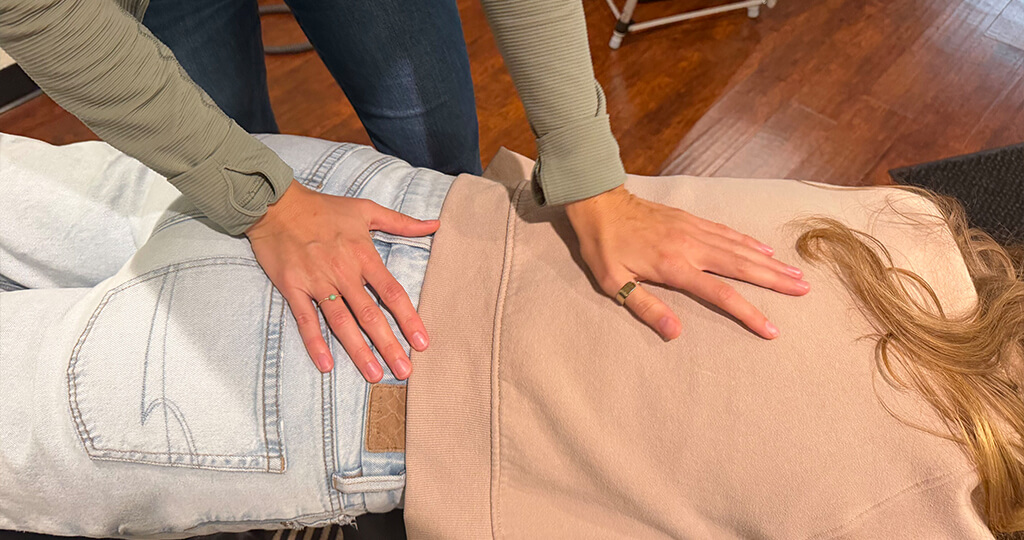
An adjustment helps clear that interference and unwind stored tension, and then your body takes it from there. The way we put it in TONE, a free-flowing system has more ease and better tone, so it’s more able to adapt to whatever life brings.
Your part matters just as much as ours. Every time you make a choice that supports you, you get a little better at making the next one.
What can I do when stress and big emotions show up?
Start by remembering that you still get to choose. Something happened that you didn’t like? That’s okay. You still get to decide how you respond, and that’s where your power is.
Watch what a dog does after something scares it. It shakes it off, and then it goes and finds its people. We could all stand to do more of that. Move your body, and go be with the people who help you feel safe.
When a harsh thought creeps in, you don’t have to fight it. Say hello to it, notice that it isn’t helping you anymore, and choose a different one. Sometimes the healthiest thing you can do is stop beating yourself up in your own mind.
Look at what you’re saying yes to, too. Maybe this week you say no to one thing that drains you, so you can say yes to a nap on the couch or a slow day at home with your kids. Change is hard. Staying stuck is hard, too. Choose your hard.
And please don’t try to do this alone. We weren’t put here to do life by ourselves.
Share what’s on your heart with someone you trust.
If you want somewhere to start, try what we suggest at the end of TONE. Write down one to five new thoughts, habits or ideas. Picture how your next week, month and year could look if you took them on. Then pick one and do it.
The bigger picture
So much of what we believe about ourselves and the world was taught to us long before we knew we had a choice. Those beliefs shape how we think, how we feel, and how we move through life. But once we become aware of them, we get to choose. We can hold on to what serves us and let go of what doesn’t. And that’s where real change begins. You don’t have to do it alone.
If your body has been carrying a lot lately and you’re not a practice member yet, we’d love to meet you. We’ll listen to your story, check your spine and nervous system, and talk through what we find.
Frequently asked questions
Can stress cause physical symptoms?
In TONE, we describe nagging symptoms as the body’s way of letting us know a stress is outpacing its ability to adapt. We see symptoms as communication worth listening to. If something worries you, talk with your provider, too.
Can emotions be stored in the body?
We believe emotional trauma can be stored in the body along with physical stress. Practice members sometimes tell us they feel lighter after sharing something they’ve carried for a long time.
Can a chiropractor help with stress?
Our focus is your spine and nervous system. We check for areas where your body isn’t adapting well and adjust them, so your brain and body can communicate with more ease. Practice members often tell us they handle everyday stress more calmly with regular care.
Where can I get the TONE book?
New practice members receive a copy when they start care. TONE: The Interconnection of Your Life and Your Health by Dr. Danny Otis and Dr. Lona Cook is also available at Cook Chiropractic and drlonacook.com.
Sources
Otis, Danny, and Lona Cook. TONE: The Interconnection of Your Life and Your Health. Available at Cook Chiropractic and drlonacook.com.
More conversations like this one are on our YouTube channel. Subscribe so you don’t miss the next one.